Features in Sewing Machines: What It Is and Is It Worth It?
As an Amazon Associate we earn from qualifying purchases. Links on this page are affiliate links.
Understanding Key Sewing Machine Features
When you browse for a new sewing machine, you will see many technical terms. These features explained help you choose the right tool for your projects. Two common specifications are the needle threader and the differential feed. Understanding what they do can save you time and improve your results.
A needle threader is a small mechanical device attached to the needle bar. It helps you pass the thread through the tiny eye of the needle. This is useful for people with poor eyesight or those who sew for long periods. The mechanism usually involves a small wire hook that catches the thread and pulls it through. You engage it by lowering the needle or pressing a lever. It does not replace manual threading but makes it faster and less frustrating.
Differential feed controls the movement of the fabric layers. Standard feed dogs move the fabric forward. With differential feed, you can adjust the speed of the upper and lower feed dogs independently. This prevents stretching or gathering of knit fabrics. It also helps when sewing slippery materials like silk. You set a ratio on the machine, often labeled as a number or a dial position. A ratio greater than one moves the top layer faster. A ratio less than one slows it down. This control is essential for professional-looking seams on tricky materials.
Both features add convenience and precision to your sewing. They are not strictly necessary for basic cotton projects. However, if you plan to work with knits or delicate fabrics, they are valuable. Look for these specs in the product details before you buy. They indicate how versatile the machine is for different tasks. Check the manual for how to adjust these settings. Proper use ensures your stitches remain even and your fabric stays flat. These features explained clearly show what capabilities you get with the machine.
Needle Threader vs Differential Feed
Needle Threader
A needle threader automates the process of passing thread through the eye of the needle. This feature saves time and reduces eye strain, especially for users with limited dexterity or poor eyesight. It is particularly useful for frequent thread changes or working with fine, slippery threads that are difficult to handle manually. You will find this on beginner-friendly models like the Janome 1522 and Janome MOD-19. These machines prioritize ease of use for those new to sewing. While convenient, this feature does not affect stitch quality or fabric handling. It is a convenience spec rather than a performance spec. If you sew occasionally, manual threading may suffice. If you sew daily, the needle threader offers significant time savings.
Differential Feed
Differential feed controls the speed of the front and back feed dogs independently. This prevents fabric from stretching or puckering, which is critical when sewing knits, stretchy materials, or varying fabric weights. It ensures even feeding across the seam, resulting in professional-looking finishes without distortion. You will see this feature on heavy-duty sergers and advanced machines like the SINGER 6600C and 6800C sets. These models target users working with challenging fabrics or requiring precise edge finishing. This spec is essential for garment construction involving jersey or silk. Without it, seams may waver or gather unevenly. It adds complexity to the machine but significantly improves stitch consistency. If you only sew wovens, you may not need it. For knits, it is often indispensable.
Needle Threader and Diff Feed Worth It
Who needs it
You will benefit most if you sew frequently or handle thick materials often. The needle threader saves significant time by automating a tedious task. This is especially helpful if you have limited dexterity or poor eyesight, as it reduces eye strain. The differential feed is crucial for preventing fabric distortion. It adjusts the feed dogs independently, ensuring even feeding of multiple layers. This feature is essential when working with knits, stretch fabrics, or slippery materials. Without it, your seams may pucker or stretch unevenly. If your projects involve precise garment construction or handling delicate textiles, these features ensure professional results. They reduce frustration and improve accuracy, making complex tasks manageable. For serious hobbyists or those producing many items, these specifications streamline your workflow and enhance the quality of your finished pieces.
Who can skip it
You can skip these features if you primarily sew simple quilts or straight seams on stable fabrics. Beginners who are still learning basic stitching may not yet need advanced controls. The differential feed is unnecessary for flat, woven materials that do not stretch or shift. Similarly, manual needle threading is a quick process for those with good vision and steady hands. Instead of focusing on these specifics, prioritize a machine with a strong motor and clear stitch selection. Look for durability and ease of maintenance rather than automation. Simple machines are often lighter and easier to store. You can always thread the needle manually without significant delay. Focus on learning fundamental techniques first. Advanced features add complexity and cost. Stick to basics until you require precision for challenging fabrics. This approach keeps your sewing experience straightforward and manageable.
Sewing Machine Glossary
Sewing Machine Type
This describes the physical form of the device. Common types include portable machines for home use and industrial models for heavy-duty commercial work. Your choice depends on your workspace and project volume.
Suitable For
This label indicates the intended user level or fabric weight. Entries like beginner, advanced, or heavy-duty help you match the machine capabilities to your skill level and the materials you plan to sew.
Sewing Speed
Measured in stitches per minute, this spec shows how fast the needle moves. Higher speeds allow for quicker completion of large projects, while lower speeds offer better control for detailed or delicate work.
Included Accessories
These are the extra items provided in the box, such as presser feet, bobbins, or needles. Reviewing this list helps you determine if you need to purchase additional tools to start your first project.
Features
This category lists specific functions like automatic needle threading or buttonhole makers. These tools automate tedious tasks, improve precision, and reduce the learning curve for complex sewing techniques and finishing details.
Display
The display shows your current settings, stitch type, or error messages. Options range from simple LED indicators to digital screens that allow you to scroll through menus and adjust parameters with greater ease.
Stitch Count
This number indicates how many different stitch patterns the machine can produce. A higher count offers more versatility for decorative edges, while a lower count may suffice for basic straight and zigzag stitching needs.
Width
This refers to the maximum distance the needle can move from center. A wider stitch width allows for broader zigzag patterns, which is essential for sewing stretchy fabrics or creating wide decorative borders.
Quick picks
| # | Product | Best for | Price |
|---|---|---|---|
| 1 | Janome 1522 Mechanical Sewing Machine | Beginners needing a sturdy metal frame and needle threader | Check price of Janome 1522 Mechanical Sewing Machine on Amazon |
| 2 | SINGER Heavy Duty Serger and Sewing Machine Set | heavy fabric projects and edge finishing | Check price of SINGER Heavy Duty Serger and Sewing Machine Set on Amazon |
| 3 | Janome MOD-19 Sewing Machine | basic home sewing and beginners | Check price of Janome MOD-19 Sewing Machine on Amazon |
| 4 | SINGER Heavy Duty Sewing Machine and Serger Bundle | heavy fabric serging and durability | Check price of SINGER Heavy Duty Sewing Machine and Serger Bundle on Amazon |
Our 4 picks
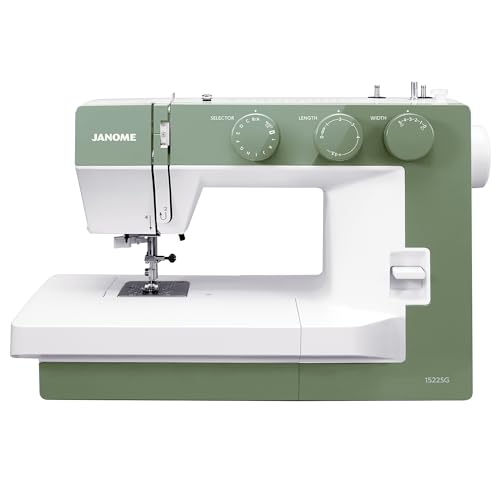
Janome 1522 Mechanical Sewing Machine
Best for: Beginners needing a sturdy metal frame and needle threader
- Features
- Needle Threader (what this guide is about)
- Stitch Count
- 22
- Type
- Heavy Duty
- Suitable For
- Beginners
- Dimensions
- 7.5 × 17.5 × 11 inches
- Weight
- 14.3 pounds
View on Amazon: Janome 1522 Mechanical Sewing Machine Affiliate link
The Janome 1522SG is a heavy-duty mechanical sewing machine with a solid metal frame. It offers 22 built-in stitches and a one-step buttonhole. Key specs include a needle threader and foot pressure adjustment for different fabrics. Its extra-wide sewing bed and large accessory storage make it practical for beginners. This soft green model weighs 14.3 pounds.
Pros
- Solid metal frame construction for structural integrity
- 22 built-in stitches including utility and decorative options
- Built-in needle threader for easier setup
- Foot pressure adjustment dial with 3 settings
- Extra-wide sewing bed and open-top accessory storage
Cons
- No differential feed feature listed in specifications
- Mechanical operation limits automated stitch precision
- Heavier build at 14.3 pounds reduces portability
Good fit if
- You want a sturdy machine with a metal frame
- You need a needle threader for convenience
- You are a beginner looking for easy setup
Skip if
- You require differential feed for knits
- You need a lightweight portable machine
- You prefer computerized stitch control
Verdict: Janome 1522SG Soft Green Sewing Machine is a sturdy option for beginners who value a metal frame and a needle threader. It fits those who need basic stitch variety and easy fabric handling without automated features.

SINGER Heavy Duty Serger and Sewing Machine Set
Best for: heavy fabric projects and edge finishing
- Features
- Differential Feed (what this guide is about)
- Stitch Count
- 215
- Display Type
- LCD screen
View on Amazon: SINGER Heavy Duty Serger and Sewing Machine Set Affiliate link
This bundle pairs a heavy-duty sewing machine with a serger. You get 215 built-in stitches and an LCD screen for clear selection. The serger offers differential feed and handles up to 1,100 stitches per minute. This setup suits you if you need speed and professional edge finishing. The metal frame supports tough fabrics like denim and leather.
Pros
- 215 built-in stitches including buttonholes
- LCD screen for stitch selection
- Serger with differential feed
- 1,100 stitches per minute speed
Cons
- No automatic needle threader listed
- Serger requires manual threading
- Heavy and bulky combined unit
Good fit if
- You sew heavy fabrics like denim
- You want professional edge finishing
- You need high stitch speed
Skip if
- You prefer lightweight machines
- You want automatic threading
- You only need basic sewing
Verdict: SINGER Heavy Duty 6600C with Serger delivers high speed and professional finishes for tough materials. It fits sewers who prioritize stitch variety and edge cleaning over portability.
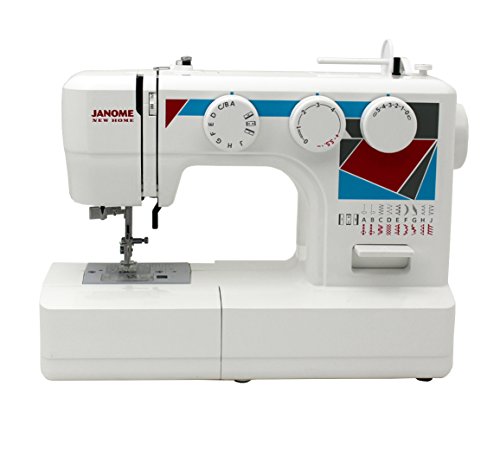
Janome MOD-19 Sewing Machine
Best for: basic home sewing and beginners
- Features
- Needle Threader (what this guide is about)
- Stitch Count
- 19
- Included Presser Feet
- 4
- Dimensions
- 16 × 7 × 12 inches
- Weight
- 11.7 pounds
View on Amazon: Janome MOD-19 Sewing Machine Affiliate link
The Janome MOD-19 is a basic mechanical sewing machine designed for straightforward stitching tasks. It offers 19 built-in stitches, including a one-step buttonhole, and features an automatic needle threader to simplify setup. The machine includes a 5-piece feed dog system and four presser feet. Weighing 11.7 pounds, it provides a stable base for general home sewing projects without complex digital controls.
Pros
- Includes an automatic needle threader for easier setup
- Features a 5-piece feed dog system for reliable fabric movement
- Offers 19 stitch patterns including a one-step buttonhole
- Provides adjustable stitch length and width for customization
Cons
- Limited to 19 stitches compared to higher-end models
- Only includes 4 presser feet
- Lacks differential feed capability
Good fit if
- You need a simple machine with an automatic needle threader
- You are working on basic home sewing projects
- You prefer mechanical controls over digital interfaces
Skip if
- You require advanced features like differential feed
- You need a wide variety of decorative stitches
- You are looking for a heavy-duty industrial machine
Verdict: Janome MOD-19 Sewing Machine is a practical entry-level option for users who value simplicity and ease of use. It suits beginners or those needing a reliable machine for basic repairs and simple garments.

SINGER Heavy Duty Sewing Machine and Serger Bundle
Best for: heavy fabric serging and durability
- Features
- Differential Feed (what this guide is about)
- Stitch Count
- 586
- Max Stitch Width
- 5 mm
- Display Type
- LCD screen
View on Amazon: SINGER Heavy Duty Sewing Machine and Serger Bundle Affiliate link
This bundle pairs a computerized sewing machine with a serger. It offers 586 stitch applications and an LCD screen for clear settings. The serger features a heavy-duty metal frame and a powerful motor rated 60% stronger than standard units. You get adjustable differential feed and speeds up to 1,300 stitches per minute. It includes a large cutting knife for thick fabrics like denim. This setup suits users who need robust construction and versatile finishing options.
Pros
- 586 stitch applications including decorative and lettering fonts
- Heavy-duty metal frame for stability and durability
- LCD screen for clear interface visibility
- Adjustable differential feed prevents puckering on stretch fabrics
- Motor is 60% stronger than standard models
Cons
- High stitch count may overwhelm beginners
- Large cutting knife is specialized for heavy fabrics
- Serger requires learning 2, 3, or 4-thread configurations
Good fit if
- You sew thick materials like denim or canvas
- You want a metal frame for stability
- You need an LCD screen for settings
Skip if
- You prefer lightweight plastic construction
- You only sew lightweight fabrics
- You want a simple mechanical interface
Verdict: Singer Heavy Duty 6800C Serger delivers professional-grade stability and speed for heavy fabrics. It fits sewers who need durable metal construction and advanced serging capabilities.
Specifications side by side
| Spec | Janome 1522 Mechanical Sewing Machine | SINGER Heavy Duty Serger and Sewing Machine Set | Janome MOD-19 Sewing Machine | SINGER Heavy Duty Sewing Machine and Serger Bundle |
|---|---|---|---|---|
| Stitch Count | 22 | 215 | 19 | 586 |
| Max Stitch Width | not stated | not stated | not stated | 5 mm |
| Display Type | not stated | LCD screen | not stated | LCD screen |
| Included Presser Feet | not stated | not stated | 4 | not stated |
| Type | Heavy Duty | Heavy Duty, Serger | not stated | Heavy Duty, Serger |
| Suitable For | Beginners | not stated | not stated | not stated |
| Features | Needle Threader | Differential Feed | Needle Threader | Differential Feed |
| Display | not stated | LCD Screen | not stated | LCD Screen |
| Dimensions | 7.5 × 17.5 × 11 inches | not stated | 16 × 7 × 12 inches | not stated |
| Weight | 14.3 pounds | not stated | 11.7 pounds | not stated |
| Size | W 17" x H 11" x D 7.5" | not stated | MOD-19 | not stated |
| Color | Soft Green | matte black | White | not stated |
| Model | 0011522-SG | 6600C | 150816 | 6800C |
Frequently asked questions
Does a needle threader work on all needle sizes?
Most automatic needle threaders handle standard household needles. The Janome 1522 and Janome MOD-19 include this feature for beginners. Check your manual for compatibility with specialty or heavy-duty needles. Some machines require you to raise the needle to the highest position before engaging the threader. This ensures the mechanism aligns correctly with the needle eye.
What is the purpose of differential feed on a serger?
Differential feed controls the speed of the upper and lower feed dogs. This prevents fabric from stretching or gathering during sewing. It is essential for handling knits or slippery materials. The SINGER Heavy Duty models use this feature to maintain consistent stitch length. It helps you achieve professional finishes on difficult fabrics without distortion.
Can I use a needle threader with thick denim?
You can use a needle threader with thick denim if your machine supports it. The Janome 1522 is a heavy-duty machine with a metal frame. It includes a needle threader for easier threading. Ensure the needle is appropriate for the fabric weight. Thicker threads may require manual threading if the automatic mechanism struggles with bulk.
Is a differential feed necessary for woven fabrics?
It is helpful but not always mandatory for woven fabrics. Wovens are less likely to stretch than knits. However, differential feed improves stitch quality on light or sheer wovens. The SINGER serger models include this feature for versatile use. You can adjust the ratio to prevent puckering. It offers greater control over fabric handling.
How does machine weight affect stability during sewing?
Heavier machines provide better stability and reduce vibration. The Janome 1522 weighs 14.3 pounds, which helps it stay in place. The Janome MOD-19 is lighter at 11.7 pounds. A heavier frame absorbs the energy of the needle. This results in more consistent stitches. Portability may decrease as weight increases.
Do sergers with LCD screens offer more control?
LCD screens display settings clearly for easier adjustment. The SINGER Heavy Duty models feature LCD displays. They show stitch length, width, and tension settings. This digital interface simplifies operation compared to analog dials. You can see exact values for precise adjustments. It is useful for complex projects requiring specific settings.
What type of machine is best for beginners?
Beginners benefit from machines with simple features and sturdy construction. The Janome 1522 offers a metal frame and needle threader. The Janome MOD-19 is a practical entry-level option. Both are suitable for basic home sewing. They provide reliability without overwhelming automated functions. Start with these models to build confidence in your skills.