Display Explained: What It Means for Sewing Machines
As an Amazon Associate we earn from qualifying purchases. Links on this page are affiliate links.
Display Explained: LCD Screens
Most modern sewing machines feature an LCD screen. This spec tells you how you interact with the device. The display replaces physical buttons or dials for many settings. You see stitch patterns, tension numbers, and speed limits on this panel. It provides visual feedback for every adjustment you make.
When you look at listings, you will see the term LCD screen. This stands for Liquid Crystal Display. It is a flat panel that uses light modulation to show text and icons. You do not need to squint at small print. The screen illuminates the information clearly. This helps you select the correct stitch without guessing. You can see the stitch length and width values directly. This reduces errors during setup.
The size of the display varies. Some machines have small screens that show only basic info. Others offer larger panels with more detail. A larger screen allows you to see more options at once. It also makes reading easier if you have vision challenges. Check the product specifications for screen dimensions. This helps you judge usability before you buy.
Why does this matter to you? An LCD screen simplifies complex tasks. You do not need to memorize stitch codes. The machine shows you what it is doing. This is especially helpful for beginners. You can follow the on-screen prompts step by step. It also aids experienced sewers who need quick access to settings. You can change parameters without stopping your work.
Display explained shows that technology improves control. You get precise adjustments through a digital interface. The screen acts as your main command center. It bridges the gap between your intent and the machine’s action. Choosing a model with a good LCD screen ensures a smoother sewing experience. You spend less time fiddling with knobs and more time creating. This spec is a key factor in overall machine usability.
LCD Screen Display Types
LCD Screen
An LCD screen shows stitch patterns, tension settings, and speed limits visually. You select options by pressing buttons rather than turning dials. This interface reduces guesswork during setup. The Brother CS5055 uses this layout for clear feedback on basic tasks. Quilters often prefer the Brother HC1850 because the screen manages its 185 built-in stitches without clutter. Heavy-duty users like the SINGER 6800C rely on the display to track stitch variety while working with thick fabrics. The trade-off is that you must look down to confirm settings. Physical dials offer tactile feedback, but screens provide precise numerical data. This spec suits anyone who values visual clarity over manual adjustment.
LCD Screen
The Brother ST150HDH includes an LCD screen for clear visual stitch guidance. This feature helps users prioritize basic durability and simple operations. The Brother CS7000X also features this display type, allowing quilters to manage 70 stitches on a stable metal frame. The SINGER 6600C uses the screen to control reliable speed and stitch variety for denim or leather work. All listed models share this common interface element. You get consistent visual feedback across different brands. The main benefit is ease of use for beginners. Advanced users might find the limited interface restrictive compared to larger displays. However, the clarity remains high for standard sewing tasks.
Who Needs An LCD Screen
Who needs it
You should prioritize this spec if you value visual clarity and ease of use. An LCD screen provides immediate feedback on stitch patterns, tension settings, and speed limits. This visual interface replaces guesswork, allowing you to confirm your selections before stitching. If you are new to sewing, the clear display helps you learn settings without memorizing button combinations. It also benefits those who frequently switch between complex stitch types. Seeing the exact tension number or stitch width on screen ensures consistency. This reduces errors and saves time during setup. The screen makes it easier to adjust parameters on the fly. You get precise control over your machine’s functions through a straightforward visual guide. This is ideal for detailed projects where accuracy matters most.
Who can skip it
You can ignore this spec if you prefer tactile controls or are on a tight budget. Basic mechanical machines often use physical dials and levers. These offer direct feedback through touch rather than sight. If you only sew simple straight stitches, a digital display adds unnecessary complexity. You might find physical knobs more intuitive for quick adjustments. Prioritize durability and stitch variety instead of the interface type. A robust motor and reliable needle movement matter more than the screen. Many entry-level models omit LCDs to keep costs down. Focus on the number of stitches and build quality. You do not need a visual panel for basic mending or simple repairs. Stick to machines that match your skill level and project needs.
Sewing Display Glossary
LCD Screen
A liquid crystal display that shows stitch patterns and settings visually. You select options by pressing buttons rather than turning mechanical dials.
Stitch Count
The total number of built-in stitch patterns available. A higher count offers more variety for decorative edges and functional seams.
Sewing Speed
The maximum rate at which the needle moves. This spec tells you how quickly you can complete projects, often measured in stitches per minute.
Buttonhole Function
A feature that automates the creation of buttonholes. You insert the button to measure it, and the machine sews a consistent loop automatically.
Tension Control
A setting that adjusts thread tightness. Proper tension prevents loose loops or tight puckering in your fabric seams.
Presser Foot
A metal or plastic clamp that holds fabric against the feed dogs. Different feet handle specific tasks like zippers or buttonholes.
Needle Threader
A mechanical aid that guides thread through the needle eye. This feature saves time and reduces eye strain during setup.
Free Arm
A removable section of the machine bed that creates a cylindrical space. This design makes sewing cuffs and pant legs easier.
Hard Cover
A protective case that shields the machine from dust and scratches. It keeps the device safe when not in use.
Utility Stitches
Basic stitches designed for everyday sewing tasks. These include straight stitches for seams and zigzag stitches for finishing raw edges.
Quick picks
| # | Product | Best for | Price |
|---|---|---|---|
| 1 | Brother Computerized Sewing Machine with LCD Screen | General sewing with clear LCD feedback | Check price of Brother Computerized Sewing Machine with LCD Screen on Amazon |
| 2 | Brother LCD Sewing and Quilting Machine | Quilters needing a stable machine with an LCD | Check price of Brother LCD Sewing and Quilting Machine on Amazon |
| 3 | SINGER Heavy Duty 6800C Sewing Machine | heavy fabric projects with many stitch options | Check price of SINGER Heavy Duty 6800C Sewing Machine on Amazon |
| 4 | SINGER Heavy Duty LCD Sewing Machine | Heavy fabric sewing with clear LCD control | Check price of SINGER Heavy Duty LCD Sewing Machine on Amazon |
| 5 | Brother Strong & Tough Sewing Machine | Basic sewing with clear LCD guidance | Check price of Brother Strong & Tough Sewing Machine on Amazon |
| 6 | Brother Quilting Machine with 185 Stitches | Quilters needing high stitch variety and visual feedback | Check price of Brother Quilting Machine with 185 Stitches on Amazon |
Our 6 picks

Brother Computerized Sewing Machine with LCD Screen
Best for: General sewing with clear LCD feedback
- Display
- LCD Screen (what this guide is about)
- Stitch Count
- 60
- Display Type
- LCD Display
- Included Presser Feet
- 7 sewing feet
- Dimensions
- 16.3 × 6.65 × 12.2 inches
- Weight
- 10.5 pounds
View on Amazon: Brother Computerized Sewing Machine with LCD Screen Affiliate link
The Brother CS5055 is a computerized sewing machine featuring an LCD display for clear stitch selection. It offers 60 built-in stitches and 7 one-step buttonholes. The metal frame and fixed needle bar provide stability for even stitching. With a 10.5-pound weight and a large needle-to-arm workspace, it handles various projects. This model suits users needing reliable stitch variety and a clear interface.
Pros
- LCD display for clear stitch information
- 60 built-in stitches including decorative options
- 7 one-step auto-size buttonholes
- Durable metal frame construction
- Large needle-to-arm workspace
Cons
- Fewer built-in stitches than the Brother HC1850
- Heavier and bulkier than some portable models
- Limited to 60 stitches compared to advanced quilters' needs
Good fit if
- You want a clear LCD screen for stitch selection
- You need 60 versatile built-in stitches
- You prefer a stable metal frame machine
Skip if
- You require more than 60 built-in stitches
- You need a lightweight portable machine under 10 pounds
- You are looking for a basic mechanical machine without a display
Verdict: Brother CS5055 LCD Sewing Machine fits beginners and intermediates who value a clear LCD interface and a moderate stitch count. It is a solid choice for general sewing and light quilting tasks.
Brother LCD Sewing and Quilting Machine
Best for: Quilters needing a stable machine with an LCD
- Display
- LCD Screen (what this guide is about)
- Stitch Count
- 70 built-in stitches
- Display Type
- LCD Display
- Included Presser Feet
- 10 sewing feet
- Suitable For
- Quilting
- Included Accessories
- Extension Table
View on Amazon: Brother LCD Sewing and Quilting Machine Affiliate link
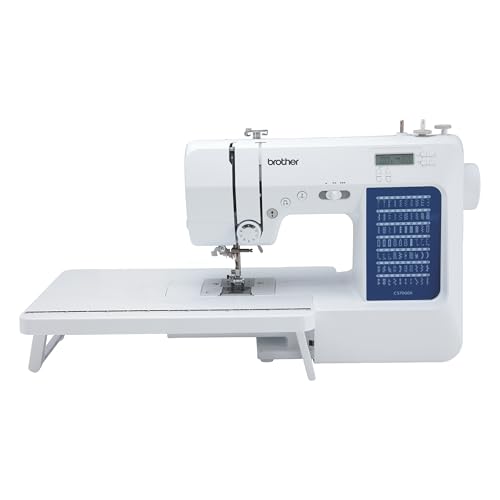
The Brother CS7000X features an LCD display and 70 built-in stitches. It includes a metal frame and a fixed needle bar for stability. The large needle-to-arm workspace handles quilts well. You get 10 presser feet and a wide table. This machine suits quilters who need reliable stitch selection and a clear screen for settings.
Pros
- LCD display for clear stitch selection
- 70 built-in stitches including quilting functions
- Metal frame and fixed needle bar for stability
- Large needle-to-arm workspace for big projects
- Includes wide table for quilting support
Cons
- 70 stitches is fewer than some competitors
- 14-pound weight makes it less portable
- No mention of wireless connectivity features
Good fit if
- You need an LCD screen for stitch selection
- You quilt large projects requiring extra space
- You want a metal frame for stability
Skip if
- You need more than 70 built-in stitches
- You require wireless connectivity or app control
- You need a lightweight portable machine
Verdict: Brother CS7000X LCD Quilting Machine fits quilters who value a stable metal frame and a clear LCD screen for managing 70 stitches. It handles large projects well but lacks the stitch count of higher-end models.

SINGER Heavy Duty 6800C Sewing Machine
Best for: heavy fabric projects with many stitch options
- Display
- LCD Screen (what this guide is about)
- Stitch Count
- 586
- Max Sewing Speed
- 1,100 stitches per minute
- Max Stitch Width
- 5 mm
- Display Type
- LCD screen
- Suitable For
- Hemming
View on Amazon: SINGER Heavy Duty 6800C Sewing Machine Affiliate link
The SINGER Heavy Duty 6800C features an LCD screen and 586 stitch applications. It delivers speeds up to 1,100 stitches per minute with a motor 60% stronger than standard models. The machine includes a non-stick foot for leather and a side cutter for hemming. You will find this setup useful for heavy fabrics and detailed crafting projects.
Pros
- 586 built-in stitch applications
- 1,100 stitches per minute max speed
- Non-stick presser foot for vinyl
- Built-in side cutter attachment
- Motor is 60% stronger than standard
Cons
- Max stitch width is limited to 5 mm
- No mention of automatic needle threader
- No app connectivity for stitch design
Good fit if
- You sew thick materials like denim
- You need precise decorative stitching
- You want a strong motor
Skip if
- You require wide decorative stitching
- You need smart device control
- You prefer lightweight machines
Verdict: The SINGER Heavy Duty 6800C LCD is a robust tool for users who prioritize motor strength and stitch variety over wide width capabilities. It fits those tackling heavy fabrics who value a clear LCD interface.

SINGER Heavy Duty LCD Sewing Machine
Best for: Heavy fabric sewing with clear LCD control
- Display
- LCD Screen (what this guide is about)
- Stitch Count
- 215
- Max Sewing Speed
- 1,100 stitches per minute
- Display Type
- LCD screen
- Suitable For
- Hemming
View on Amazon: SINGER Heavy Duty LCD Sewing Machine Affiliate link
The SINGER Heavy Duty 6600C features a clear LCD screen for intuitive stitch selection. It offers 215 built-in stitches and reaches a maximum speed of 1,100 stitches per minute. This machine suits users who need heavy-duty power for thick fabrics like denim and leather. The parallel sewing foot helps create evenly spaced decorative rows. It is designed for hemming and crafting projects that require precision and speed.
Pros
- LCD screen for clear stitch selection
- 215 built-in stitches including decorative options
- 1,100 stitches per minute maximum speed
- Parallel sewing foot for even decorative stitching
Cons
- Fewer built-in stitches than the 185-stitch Brother HC1850
- No mention of automatic needle threading
- No mention of wireless connectivity or app control
Good fit if
- You need an LCD display for easy stitch navigation
- You sew heavy materials like denim or canvas
- You want a high-speed machine for faster projects
Skip if
- You require more than 215 built-in stitch options
- You need advanced smart features or app integration
- You prefer a machine with automatic needle threading
Verdict: SINGER Heavy Duty 6600C LCD Sewing Machine delivers reliable speed and stitch variety for heavy fabric tasks. It fits users who prioritize a clear display and powerful motor for denim or leather work.

Brother Strong & Tough Sewing Machine
Best for: Basic sewing with clear LCD guidance
- Display
- LCD Screen (what this guide is about)
- Stitch Count
- 50
- Display Type
- LCD display
- Included Presser Feet
- 9 feet
- Dimensions
- 7.01 × 16.3 × 12.5 inches
- Weight
- 16 pounds
View on Amazon: Brother Strong & Tough Sewing Machine Affiliate link
The Brother ST150HDH is a heavy-duty sewing machine with an LCD display. It offers 50 built-in stitches and 9 presser feet. The screen shows stitch selections, size, and foot recommendations. It weighs 16 pounds and includes a stabilizer roll. This machine suits users needing clear visual feedback and basic utility functions for standard sewing tasks.
Pros
- LCD screen displays stitch size and foot recommendations
- 50 built-in standard and decorative stitches
- Includes 9 presser feet and advanced needle threader
Cons
- Only 50 built-in stitches
- No mention of Bluetooth or app connectivity
- Heavier build at 16 pounds
Good fit if
- You want clear stitch info on an LCD screen
- You need basic utility and decorative stitches
- You prefer a straightforward interface without smart features
Skip if
- You need more than 50 built-in stitches
- You require wireless connectivity or app control
- You prefer a lightweight portable machine
Verdict: Brother ST150HDH LCD Sewing Machine fits users who prioritize clear visual stitch guidance and basic durability over advanced smart features or extensive stitch libraries.

Brother Quilting Machine with 185 Stitches
Best for: Quilters needing high stitch variety and visual feedback
- Display
- LCD Screen (what this guide is about)
- Stitch Count
- 185
- Display Type
- LCD Display
- Included Presser Feet
- 8 feet
- Suitable For
- Quilting
- Dimensions
- 19.2 × 12.5 × 15.2 inches
View on Amazon: Brother Quilting Machine with 185 Stitches Affiliate link
The Brother HC1850 is a sewing and quilting machine featuring an LCD display for stitch selection. It offers 185 built-in stitches, including 130 sewing options and 55 alphanumeric stitches. The unit includes a drop-in top bobbin and an advanced needle threader. Weighing 10.1 pounds, it comes with a wide table and eight presser feet. This model suits quilters needing extensive stitch variety and clear visual feedback on the screen.
Pros
- 185 built-in stitches including 55 alphanumeric options
- LCD screen for easy stitch selection and viewing
- Advanced needle threader and jam-resistant drop-in bobbin
- Includes wide table and eight presser feet
Cons
- Heavier build at 10.1 pounds compared to lighter models
- Fewer included presser feet than some competitors
- Limited to 120 volts for US use only
Good fit if
- You need a large variety of stitches for quilting projects
- You prefer visual confirmation of settings on an LCD screen
- You want a machine with a wide table for large pieces
Skip if
- You require a lightweight machine for frequent travel
- You need more than 185 built-in stitch options
- You are outside the US and need a different voltage
Verdict: Brother HC1850 185-Stitch Quilting Machine provides a high stitch count and clear LCD interface for detailed quilting work, making it a solid choice for home quilters who value variety and visual control.
Specifications side by side
| Spec | Brother Computerized Sewing Machine with LCD Screen | Brother LCD Sewing and Quilting Machine | SINGER Heavy Duty 6800C Sewing Machine | SINGER Heavy Duty LCD Sewing Machine | Brother Strong & Tough Sewing Machine | Brother Quilting Machine with 185 Stitches |
|---|---|---|---|---|---|---|
| Stitch Count | 60 | 70 built-in stitches | 586 | 215 | 50 | 185 |
| Max Sewing Speed | not stated | not stated | 1,100 stitches per minute | 1,100 stitches per minute | not stated | not stated |
| Max Stitch Width | not stated | not stated | 5 mm | not stated | not stated | not stated |
| Display Type | LCD Display | LCD Display | LCD screen | LCD screen | LCD display | LCD Display |
| Included Presser Feet | 7 sewing feet | 10 sewing feet | not stated | not stated | 9 feet | 8 feet |
| Type | Computerized | not stated | Heavy Duty | Heavy Duty | not stated | not stated |
| Suitable For | not stated | Quilting | Hemming | Hemming | not stated | Quilting |
| Included Accessories | not stated | Extension Table | not stated | not stated | not stated | not stated |
| Display | LCD Screen | LCD Screen | LCD Screen | LCD Screen | LCD Screen | LCD Screen |
| Dimensions | 16.3 × 6.65 × 12.2 inches | 7 × 17 × 12 inches | not stated | not stated | 7.01 × 16.3 × 12.5 inches | 19.2 × 12.5 × 15.2 inches |
| Weight | 10.5 pounds | 14 pounds | not stated | not stated | 16 pounds | 10.1 pounds |
| Size | CS5055 | CS7000X | not stated | not stated | ST150HDH + Stabilizer Roll | 185 Built-in Stitches |
| Color | White | White | grey | Black | White | White |
| Model | CS5055 | CS7000X | 78e00737-8734-4d8a-9cc6-06428daba78e | 6600C | ST150HDH | HC1850 |
Frequently asked questions
Does an LCD screen make a sewing machine easier to use?
Yes, it simplifies setup by replacing dials with visual buttons. You see stitch patterns, tension numbers, and speed limits directly on the panel. This reduces guesswork when selecting settings. Machines like the Brother CS5055 use this layout to provide clear feedback for beginners and intermediates.
What is the benefit of an LCD screen for quilting?
It helps you manage complex stitch libraries visually. Quilters can easily select from many options, such as the 70 stitches on the Brother CS7000X or the 185 stitches on the Brother HC1850. The clear interface supports detailed work by showing exactly which pattern is active.
Do heavy duty sewing machines have LCD screens?
Yes, many robust models include them for precise control. The SINGER Heavy Duty 6800C and 6600C feature LCD screens to display settings while handling thick fabrics like denim or leather. This allows you to verify tension and speed limits without looking away from your project.
How does an LCD display help with stitch selection?
It shows the exact stitch pattern you have chosen. You press buttons to scroll through options rather than turning mechanical dials. This visual confirmation ensures you are using the correct stitch for your fabric. The Brother ST150HDH uses this for clear guidance on basic durability tasks.
Is an LCD screen necessary for basic sewing projects?
It is helpful but not strictly required. It provides immediate feedback on tension and speed, which aids accuracy. For general sewing, the Brother CS5055 offers a solid choice with clear LCD feedback. It helps you confirm settings quickly, making the process smoother for light quilting and daily tasks.
Can I see my speed settings on an LCD sewing machine?
Yes, the display typically shows your current speed limits. You can adjust and verify these numbers visually before you start sewing. This feature is common in computerized models like the Brother CS5055. It ensures you are running the machine at the optimal speed for your material.