Sister JUKI MO-6814s Series Serger 4 Thread Sewing Machine Review (2026): A Spec-Based Look
As an Amazon Associate we earn from qualifying purchases. Links on this page are affiliate links.
This sister juki mo 6814s series serger 4 thread sewing machine review covers a robust industrial-grade unit. It is a two-needle overlocker designed for high-volume production. The machine features a maximum sewing speed of 7,000rpm. This speed allows you to process large batches of garments quickly. The build includes a dedicated table and a 3/4 HP servo motor. These components provide stability and precise control during operation. You get a heavy machine head that weighs 28kg. This weight helps reduce vibration during fast stitching. The unit comes pre-assembled with most parts ready for use. You only need to install the light and thread rack.
What stands out
- Max sewing speed reaches 7,000rpm for rapid production.
- Includes a 3/4 HP servo motor for smooth operation.
- Two-needle design creates strong, professional seam finishes.
- Differential feed ratio adjusts from 1:0.6 to 1:4 for fabric control.
- Machine head weighs 28kg to minimize vibration during use.
Who it fits
Good fit for
This serger suits small business owners and serious hobbyists who need speed and durability. The 7,000rpm limit and differential feed make it ideal for sewing knits and stretch fabrics without distortion. The included table and servo motor create a complete workstation. You do not need to buy additional accessories to start working. The automatic lubrication system reduces maintenance time. If you produce garments daily, this machine handles the workload. The heavy head ensures stability when running at top speeds. It is a practical choice for high-output environments.
Who should skip it
You should look at another option if you need a compact home machine. This unit is heavy and requires a dedicated table. The industrial design means it is not portable. You also need to manage thread tension manually via push-buttons. There is no digital display to show stitch settings. The machine requires specific JUKI lubricating oil for care. If you prefer lightweight, plug-and-play devices, this serger is too bulky. It is built for stationary use in a workshop setting.
Verdict: The Juki MO-6814s is a high-speed, two-needle serger built for serious production work. It offers professional features in a complete, pre-assembled package.
Key specs explained for you
Stitch type 2-needle serger
This machine uses two needles to create a secure, professional finish on fabric edges. You get a wider, more durable seam than a single-needle model. This setup is ideal for heavy-duty tasks like denim or upholstery. It prevents the fabric from rolling during sewing. Choose this if you need strong seams for garments that undergo significant stress.
Max. sewing speed 7,000rpm
The motor reaches 7,000 stitches per minute. This high speed allows you to cut production time in half compared to standard machines. It is suitable for bulk manufacturing or commercial workshops. You can finish large projects quickly without sacrificing stitch quality. This spec is critical for professionals who need to meet tight deadlines.
Differential feed ratio For gathering 1:2
This feature controls the speed of the upper and lower feed dogs. A ratio of 1:2 allows you to gather fabric easily for ruffles or pleats. It prevents puckering on stretchy materials by adjusting how much fabric is fed. You can manage difficult fabrics with precision. This is essential for creating decorative gathers or handling delicate knits.
Max. lift of the presser foot 7mm
The presser foot lifts up to 7mm. This height accommodates thick layers of fabric or multiple pieces of material. You can sew heavy denim, upholstery, or multiple plies without strain. It ensures consistent pressure on bulky items. This clearance is vital for industrial applications where fabric thickness varies significantly.
Weight of the machine head 28kg
The machine head weighs 28kg. This heavy weight reduces vibration during high-speed operation. It provides stability for precise stitching and prevents the machine from moving on the table. You get smoother results on heavy fabrics. This mass is typical for industrial units that require steady performance during long sewing sessions.
Design and Build Overview
The listing describes the JUKI MO-6814s as a white, industrial-grade serger. It weighs 28kg for the machine head alone. This mass suggests stability during high-speed operation. You likely need a sturdy table to support the unit safely. The machine ships with a power stand and a 3/4 HP servo motor. The head arrives in its original box, separate from the assembled table. You will need to place the head on the table and connect the components yourself. The listing notes that most parts come pre-assembled, leaving only the light and thread rack for final setup.
According to the listing, the design includes automatic lubrication using JUKI Machine Oil 18. This system reduces manual maintenance for you. The unit features a micro-lifter as a standard component. This allows you to raise the presser foot slightly without lifting the main lever. The needle bar stroke measures 24.5mm. The inclination angle of the needle is 20 degrees. This geometry helps guide fabric smoothly through the stitching area. The max lift of the presser foot is 7mm. This clearance accommodates thicker fabric layers or multiple plies.
The layout includes a lever for differential-feed adjustment with micro-adjustment capability. You can fine-tune fabric feed to prevent puckering or stretching. Stitch adjustments are made by push-button. This method offers quick changes without complex dials. The heavy-duty construction and specific mechanical choices indicate a tool built for consistent, high-volume production environments rather than casual home use.
Setup and Everyday Use
Setting up this serger involves assembling the power stand and connecting the servo motor. The listing notes that the unit arrives with most parts already assembled. You will need to attach the light and the thread rack yourself. Once the machine head is placed on the table, you must thread the system and regulate the thread tension. Lubrication is automatic, but you should use JUKI Machine Oil 18 to maintain the mechanism. The servo motor is rated at 110V and 3/4 HP, providing consistent power for industrial tasks.
For daily use, the machine offers straightforward controls. Stitch adjustments are made via push-button, allowing you to change settings quickly without complex manual dials. The differential feed is managed by a lever with micro-adjustment capabilities. This feature lets you handle various fabric behaviors, from gathering up to a 1:4 ratio to stretching up to 1:0.6. The max presser foot lift of 7mm helps you navigate thicker layers easily. The max presser foot pressure of 63.7N ensures firm grip on heavy materials like denim.
The needle gauge options, including 2.0, 2.4, and 3.2mm, allow you to match thread weight to fabric thickness. Overedging widths range from 1.6mm to 6.4mm, giving you flexibility in seam finishing. The 20-degree needle inclination and 24.5mm needle bar stroke contribute to smooth operation. You can rely on the automatic lubrication system to keep the machine running efficiently during long sewing sessions. This setup supports high-volume production with minimal downtime.
What You Need To Know
You need to verify your electrical setup before installation. The listing specifies a 110V servo motor. Ensure your workshop circuits support this load. You must also confirm your table can bear the 28kg machine head. Industrial sergers require specific maintenance. You should use JUKI Machine Oil 18 for lubrication. Regular oiling keeps the automatic system functioning correctly. Keep spare needles on hand. The machine accepts needle gauges of 2.0, 2.4, and 3.2mm. Different fabrics may require different needle types. This unit fits best in a production environment. It complements standard home sewing machines by handling bulk tasks. You use it for edge finishing and hemming. Do not expect it to replace your domestic machine for delicate work. It is a specialized tool for speed and durability. Check your thread supply. The four-thread configuration consumes thread quickly. Ensure you have ample supply of compatible threads. This machine is not for beginners. It demands technical knowledge to adjust differential feed and tension. You should have experience with sergers before buying.
Check before you buy
- Confirm your table supports 28kg weight.
- Verify your electrical system handles 110V servo load.
- Purchase JUKI Machine Oil 18 for upkeep.
- Check needle gauge compatibility with your fabrics.
- Ensure you have experience with differential feed.
The product at a glance
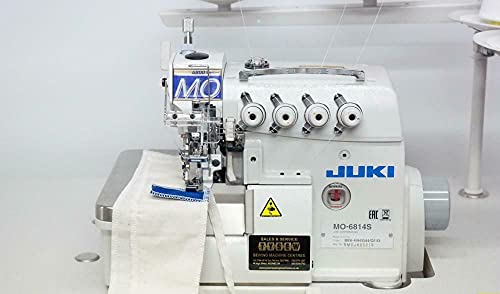
Juki Four-Thread Serger with Table
Best for: High-speed 4-thread serging tasks
- Max Sewing Speed
- 7,000rpm
- Needle Count
- 2 needle
- Type
- Serger
View on Amazon: Juki Four-Thread Serger with Table Affiliate link
The Sister JUKI MO-6814s is a 4-thread serger built for speed and precision. It reaches 7,000rpm with a 2-needle setup. The machine features automatic lubrication and a micro-lifter. You get a differential feed ratio for gathering or stretching. It includes a servo motor and table. This unit suits those needing heavy-duty performance and consistent stitch quality.
Pros
- High 7,000rpm sewing speed
- 2-needle 4-thread serger design
- Automatic lubrication system
- Includes servo motor and table
- Micro-lifter provided as standard
Cons
- Heavy 28kg machine head
- Push-button stitch adjustment only
- Differential feed max ratio is 1:4
Good fit if
- You need high-speed serging
- You want a 2-needle setup
- You prefer automatic maintenance
Skip if
- You need portable lightweight gear
- You require digital stitch controls
- You want a compact footprint
Verdict: Sister JUKI MO-6814s 4-Thread Serger delivers industrial speed for serious home sewers. It fits users who prioritize raw performance and durability over digital convenience.
Specifications side by side
| Spec | Juki Four-Thread Serger with Table |
|---|---|
| Max Sewing Speed | 7,000rpm |
| Needle Count | 2 needle |
| Type | Serger |
| Color | white |
| Model | MO 6814s |
Frequently asked questions
Is this machine suitable for heavy denim?
Yes, it handles heavy fabrics well. The two-needle design creates a wider, more durable seam than single-needle models. This setup is ideal for tasks like denim or upholstery. The industrial build supports high-volume production of thick materials without compromising stitch integrity.
Does it come with a table?
The listing title indicates it includes a table. You must ensure your workshop table can bear the 28kg machine head. The machine head itself is heavy, suggesting it requires a sturdy surface for stable operation during high-speed sewing tasks.
What is the maximum sewing speed?
The maximum sewing speed is 7,000rpm. This high speed allows you to process large batches of garments quickly. It delivers industrial performance, making it suitable for serious home sewers who prioritize raw output and durability over digital convenience features.
How many needles does it have?
It features a two-needle overlocker design. You get a secure, professional finish on fabric edges using both needles. This configuration provides a stronger seam compared to single-needle setups. It is specifically designed for high-volume production and heavy-duty serging tasks.
Is assembly difficult for beginners?
The unit arrives with most parts already assembled. You will need to attach the light and the thread rack yourself. Setting up involves assembling the power stand and connecting the servo motor. It is designed for users who prioritize performance over ease of setup.
What voltage does the motor require?
The servo motor requires 110V power. You must verify your electrical setup before installation. Ensure your workshop circuits can support this load. The machine is a white, industrial-grade serger that needs proper electrical infrastructure to operate safely at high speeds.