Sewing Machines Buying Guide (2026): What Matters and 8 Picks
As an Amazon Associate we earn from qualifying purchases. Links on this page are affiliate links.
This sewing machine buying guide helps you choose the right tool for your needs. We evaluate each model using only published specifications. You will see how stitch count, weight, and frame type affect daily use. The list covers eight options, ranked by practical utility. You can decide whether you need a portable unit for mending or a heavy-duty machine for upholstery. Each pick is selected based on its technical data, not marketing claims. You will understand what each spec means for your projects. The recommended products were chosen from their published specifications. This ensures you get reliable performance for your budget. We focus on facts like motor speed and included accessories. You will know exactly what to expect from each device. No personal testing or user reviews influence these choices. Just clear, spec-focused comparisons to help you decide. Read on to find the best fit for your sewing goals.
Our top pick: Brother 37-Stitch Free Arm Sewing Machine.
Key specs for choosing a machine
Machine type and build
The frame construction and control system define durability and ease of use. Mechanical models like the Brother 27-Stitch Portable offer straightforward utility with fewer parts to maintain. Computerized versions, such as the Brother CS5055, add digital precision and automatic features. Heavy-duty frames, seen in the SINGER 4423, provide stability for thick fabrics but add significant weight. You must balance portability against rigidity. A lighter machine is easier to store but may vibrate more during fast stitching. A heavier, metal-framed unit stays steady but requires more effort to move. Choose based on where you will sew most often.
- Metal frame for stability
- Lightweight plastic for portability
- Mechanical or computerized controls
Stitch count and variety
Stitch count determines the range of projects you can tackle without buying attachments. Basic mending machines, like the Brother 37-Stitch Free Arm, provide essential utility for repairs and simple garments. Advanced models, such as the Brother CP100X, offer over 100 patterns for decorative work and quilting. More stitches mean more versatility but also a more complex interface. If you only sew seams, a lower count is sufficient and easier to navigate. If you enjoy crafts or quilting, a higher count saves time switching settings. Consider your actual project mix before prioritizing high numbers.
- Basic utility for mending
- Decorative patterns for crafts
- Ease of stitch selection
Suitability for specific tasks
Some machines are optimized for specific materials or techniques. Heavy-duty models, like the SINGER 4411, are built for denim and upholstery, offering high speed and power. Quilting machines, such as the Brother CS7000X, include wide tables and specialized feet for large projects. General-purpose machines handle everyday garment sewing well but may struggle with thick layers. You should match the machine’s design to your primary fabric weight and project size. A versatile machine might do everything well, while a specialized one excels at one thing. Identify your most frequent sewing task first.
- Heavy-duty for thick fabrics
- Wide table for quilting
- General purpose for garments
Included accessories and feet
The number and type of presser feet included affect immediate usability. Machines like the Brother CS7000X come with ten feet, covering quilting, buttonholes, and zippers. Simpler models, like the Brother XM2701, include six feet for basic tasks. More feet mean you can start complex projects immediately without buying extras. Fewer feet keep the package simple and affordable but may require additional purchases later. Check the list of included items to ensure you have the right tool for your common tasks. This reduces hidden costs and setup time.
- Variety of presser feet
- Quilting or zipper feet
- Included accessory list
Display and control interface
How you select stitches impacts your workflow speed and accuracy. Computerized machines, like the Brother CS5055, feature LCD screens that show stitch settings clearly. This reduces errors and helps you remember complex patterns. Mechanical machines use dial selectors, which are fast but offer less visual feedback. You should choose based on your preference for digital clarity versus tactile simplicity. A display is helpful for beginners learning stitch names. Experienced sewists might prefer quick dial access. Ensure the interface matches your comfort level.
- LCD screen for clarity
- Dial selectors for speed
- Easy-to-read labels
Sewing speed and power
Speed affects how quickly you complete projects, especially on long seams. Heavy-duty machines, like the SINGER 4423, are designed for high-speed operation on tough materials. Standard machines may slow down under pressure or with thick layers. Higher speed is useful for quilting borders or garment production. However, high speed requires more control to maintain straight lines. You should consider if you need rapid stitching or precise, slow control. Match the speed rating to your fabric weight and project volume for the best results.
- High speed for efficiency
- Stable speed on thick fabric
- Controlled pace for precision
Weight and dimensions
Physical size determines where you can place the machine and how easy it is to move. The Brother XM3700 weighs 12.5 pounds, making it portable for small projects. Heavier models, like the SINGER 4423 at 17.1 pounds, stay put during intense use. Larger footprints, such as the Brother CP100X, provide stability but take up more table space. You must measure your workspace before buying. A compact machine fits small desks but may lack stability. A large machine offers a steady base but requires a dedicated spot. Balance storage needs with performance requirements.
- Fits your workspace
- Manageable weight for moving
- Stable base for heavy use
Types of Sewing Machines
Portable Mechanical
Portable mechanical machines prioritize lightweight design and straightforward operation. The Brother XM2701 weighs 12.6 pounds and offers 27 stitches. This setup suits beginners and those with limited storage space. You get essential utility without complex controls. The trade-off is fewer stitch options and a lack of digital displays. These units are ideal for basic mending and simple household repairs where speed and ease of use matter most.
Heavy Duty
Heavy duty models feature robust frames built for thick materials. The SINGER 4423 weighs 17.1 pounds and targets upholstery and denim work. These machines often include high-speed capabilities for efficient stitching. You gain stability when sewing multiple layers of fabric. The main drawback is increased weight and size, making them less portable. They are best for users who frequently tackle challenging textiles and need consistent performance under pressure.
Computerized
Computerized machines offer digital controls and expanded stitch libraries. The Brother CS5055 includes an LCD screen and 60 stitches. This type suits crafters and garment makers who need precision. You benefit from automatic threading and varied stitch patterns. The trade-off involves higher complexity and potential maintenance needs for electronic components. These models are versatile for everyday projects but may overwhelm users seeking simple, manual operation.
Quilting
Quilting machines provide wide workspaces and specialized features for large projects. The Brother CS7000X includes 70 stitches and a wide table. This setup accommodates bulky quilt layers comfortably. You gain ample room for maneuvering large fabrics. The main consideration is the significant footprint and weight, which limits portability. These machines are essential for dedicated quilters who value workspace and stitch variety over compact storage.
Common Mistakes To Avoid
Ignoring maximum stitch speed
High stitch-per-minute ratings do not guarantee control. Fast speeds can cause skipped stitches or thread breaks if your hands cannot keep pace. Check the maximum speed spec to ensure it matches your sewing rhythm. Slower machines often provide better precision for detailed work.
Overlooking presser foot pressure
Fixed pressure settings can cause fabric puckering or feeding issues. If the machine lacks adjustable pressure, thick layers may not feed evenly. Look for models with variable pressure controls. This feature ensures consistent stitching across different fabric weights and thicknesses without manual intervention.
Assuming all bobbins fit
Bobbin systems vary significantly between brands and models. Using the wrong bobbin type can damage the hook mechanism or cause jamming. Verify the bobbin style, such as Class 15 or low-shank, before purchasing accessories. Always match the bobbin to the machine's specific requirements for smooth operation.
Neglecting needle compatibility
Not all needles fit every machine shank type. Using an incompatible needle can break the needle or damage the machine head. Check the shank size, whether high-shank or low-shank, before buying needles. Proper needle selection prevents mechanical damage and ensures consistent stitch quality during your projects.
Disregarding throat space
Limited throat space restricts the size of projects you can sew. Large items like quilts or curtains require ample room to maneuver. Measure the distance from the needle to the right side of the machine. Ensure this clearance accommodates your typical project dimensions to avoid frustration.
Quick picks
Our 8 picks

Brother 37-Stitch Free Arm Sewing Machine
Best for: Everyday garment mending and portable sewing projects
- Stitch Count
- 37
- Included Presser Feet
- 5 sewing feet
- Dimensions
- 15 × 31 × 29 inches
- Weight
- 12.5 pounds
This Brother mechanical unit gives you 37 built-in stitches and a one-step auto-size buttonhole. At 12.5 pounds, it includes an automatic needle threader, a jam-resistant drop-in top bobbin, and a built-in free arm for sleeves and cuffs. You also receive five presser feet in the box. It suits you if you need a lightweight machine for everyday sewing and mending projects.
Pros
- 37 built-in stitches with a one-step auto-size buttonhole
- Automatic needle threader and drop-in top bobbin
- Built-in free arm for cuffs, sleeves, and small items
- Lightweight 12.5-pound frame for easier transport
- Includes five presser feet, bobbins, and needles
Cons
- Restricted to 120-volt electrical outlets in the US
- Limited to five presser feet without specialized quilting feet
Good fit if
- You need 37 built-in stitches and a one-step auto-size buttonhole.
- You want a 12.5-pound machine with a free arm for cuffs and sleeves.
- You prefer an automatic needle threader and drop-in bobbin system.
Skip if
- You live outside the US or lack a 120-volt power supply.
- You require more than 37 stitch options for your work.
Verdict: Brother 37-Stitch Free Arm Sewing Machine provides 37 stitches, five presser feet, and an automatic needle threader in a 12.5-pound frame. It gives you straightforward utility and decorative stitching for everyday mending and garment projects.

Brother 27-Stitch Portable Sewing Machine
Best for: everyday mending and basic household sewing
- Stitch Count
- 27 built-in stitches
- Included Presser Feet
- 6 sewing feet
- Type
- Portable, Free Arm
- Features
- Needle Threader
- Dimensions
- 5.9 × 12.1 × 15.3 inches
- Weight
- 12.6 pounds
This portable Brother sewing machine gives you 27 built-in stitches, covering blind hems, stretch stitches, and an auto-size buttonhole. It weighs 12.6 pounds and features a free arm for cuffs and sleeves. The setup includes an automatic needle threader, a drop-in top bobbin, and six presser feet. It suits you if you need a lightweight, straightforward machine for everyday household mending, basic garment construction, and simple craft projects.
Pros
- 27 built-in stitches with an auto-size buttonhole
- Includes 6 presser feet, a twin needle, and 4 bobbins
- Automatic needle threader and jam-resistant drop-in top bobbin
- Free arm design for sewing sleeves and cuffs
- Weighs 12.6 pounds for easy portability
Cons
- Configured solely for 120-volt US electrical outlets
- Offers 27 stitch options without computerized stitch selection
Good fit if
- You want a lightweight 12.6-pound machine that is easy to store and carry.
- You need core stitch options like stretch, blind hem, and auto-size buttonholes.
- You prefer built-in threading assistance and a drop-in bobbin system.
Skip if
- You need a machine compatible with power grids outside 120 volts.
- You require an extensive stitch library beyond 27 built-in options.
Verdict: Brother Portable 27-Stitch Sewing Machine delivers core utility with 27 stitches, six presser feet, and an automatic needle threader in a 12.6-pound body. It provides a simple, functional solution for everyday sewing tasks.

SINGER 4423 Heavy Duty Sewing Machine
Best for: heavy fabrics and upholstery projects
- Stitch Count
- 23
- Max Sewing Speed
- 1,100 SPM
- Type
- Heavy Duty
- Dimensions
- 6.25 × 15 × 12 inches
- Weight
- 17.1 pounds
The SINGER 4423 is a heavy-duty sewing machine built with a metal frame for stability. It delivers 1,100 stitches per minute and offers 97 stitch applications. The one-step buttonhole and automatic needle threader simplify your workflow. Weighing 17.1 pounds, it handles thick fabrics like denim and leather with ease. This model suits sewists who need power and durability for frequent use.
Pros
- Heavy-duty metal frame reduces vibrations
- 1,100 stitches per minute speed
- 97 stitch applications for versatility
- Automatic needle threader saves time
- Extra-long stitch length for thick materials
Cons
- Manual tension control dial requires adjustment
- No LCD display for stitch selection
- 17.1 pounds makes it less portable
Good fit if
- You sew heavy fabrics like denim or canvas
- You need a durable machine for frequent use
- You want a high-speed machine for efficiency
Skip if
- You prefer lightweight machines for portability
- You need computerized features with digital displays
- You only sew delicate lightweight fabrics
Verdict: SINGER 4423 Heavy Duty Sewing Machine is a robust choice for sewists tackling thick materials. It delivers speed and stability for upholstery and denim projects.

Brother Computerized Sewing Machine with LCD Screen
Best for: everyday garment making and craft sewing
- Stitch Count
- 60
- Display Type
- LCD Display
- Included Presser Feet
- 7 sewing feet
- Dimensions
- 16.3 × 6.65 × 12.2 inches
- Weight
- 10.5 pounds
View on Amazon: Brother Computerized Sewing Machine with LCD Screen
This computerized Brother machine gives you 60 built-in stitches, including utility, decorative, and heirloom options, alongside seven one-step auto-size buttonholes. You manage stitch selections on an LCD screen, while the metal frame and fixed needle bar provide stability during work. At 10.5 pounds, it includes seven presser feet and an automatic needle threader. It suits you if you need a versatile, mid-range computerized setup for everyday crafting, garments, and home repairs.
Pros
- 60 built-in stitches with 7 auto-size buttonholes
- LCD screen for viewing stitch settings
- Automatic needle threader and drop-in top bobbin
- Metal frame construction with fixed needle bar
Cons
- Operates only on US 120-volt power supplies
- Base package does not include a hard cover case
Good fit if
- You want 60 stitch choices displayed on an LCD screen.
- You need seven interchangeable presser feet included in the box.
- You prefer an automatic needle threader and jam-resistant bobbin.
Skip if
- You need electrical voltage compatibility outside 120 volts.
- You require hundreds of built-in decorative stitch patterns.
Verdict: Brother Computerized Sewing Machine provides 60 stitches and seven presser feet within a sturdy metal-framed build. It delivers clear LCD stitch control and reliable automatic threading for everyday sewing projects.

SINGER Heavy Duty High Speed Sewing Machine
Best for: heavy fabric and high speed
- Stitch Count
- 11
- Max Sewing Speed
- 1100 stitches/min
- Type
- Heavy Duty
- Dimensions
- 15.5 × 12 × 6.25 inches
- Weight
- 14 pounds
The Singer 4411 is a heavy duty sewing machine built with a durable metal frame. It offers a high sewing speed of 1,100 stitches per minute to handle thick fabrics like denim and canvas. With 11 built-in stitches, it covers basic mending and decorative techniques. This model includes essential accessories and features a free arm for tubular items.
Pros
- 1,100 stitches per minute maximum speed
- 11 built-in stitches for versatility
- Durable metal frame construction
- Includes free arm for sleeves
Cons
- Only 11 built-in stitches
- No LCD display
- 14 pounds weight
Good fit if
- You sew heavy fabrics like denim
- You need a fast machine for daily tasks
- You want a durable metal frame
Skip if
- You require advanced computerized features
- You need a wide variety of decorative stitches
- You prefer a lightweight portable unit
Verdict: Singer 4411 Heavy Duty Sewing Machine is a robust option for users who prioritize speed and durability over stitch variety. It fits those who frequently work with thick materials and need reliable performance for everyday projects.
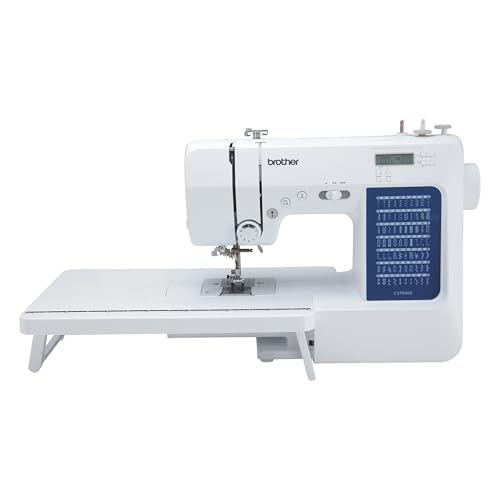
Brother LCD Sewing and Quilting Machine
Best for: quilters wanting an included wide table
- Stitch Count
- 70 built-in stitches
- Display Type
- LCD Display
- Included Presser Feet
- 10 sewing feet
- Suitable For
- Quilting
- Included Accessories
- Extension Table
- Dimensions
- 7 × 17 × 12 inches
This Brother computerized sewing and quilting machine pairs 70 built-in stitches with an LCD screen for selection. It includes an extended wide table, a quilt guide, and 10 sewing feet, giving you dedicated tools for piecing and larger fabric projects. A fixed needle bar and metal frame stabilize your stitch lines across utility and decorative work. It suits you if you need a versatile setup for garment construction and quilting.
Pros
- Includes 70 built-in stitches and 7 auto-size buttonholes
- Comes with a wide table, hard case, and 10 sewing feet
- Equipped with an automatic needle threader and drop-in top bobbin
- Built on a metal interior frame with a fixed needle bar
Cons
- Restricted to 120-volt power supplies in the United States
- Weighs 14 pounds, making it heavier than ultra-compact portable options
Good fit if
- You want an included wide table and quilt guide for handling larger projects.
- You need 70 stitch options along with 7 one-step buttonhole styles.
- You prefer an LCD screen for selecting and viewing stitches.
Skip if
- You need a sewing machine compatible with electrical systems outside 120 volts.
- You require an ultra-lightweight travel machine below 14 pounds.
Verdict: Brother Computerized Sewing and Quilting Machine delivers a practical setup with 70 stitch patterns, 10 included feet, and an expansive workspace. It serves as an adaptable choice for everyday sewing and home quilting projects.

Brother Computerized Sewing and Quilting Machine
Best for: Quilting and heavy fabric projects
- Stitch Count
- 100
- Included Presser Feet
- 10 sewing feet
- Type
- Computerized
- Suitable For
- Quilting
- Dimensions
- 19.9 × 11.9 × 17.2 inches
- Weight
- 10.5 pounds
View on Amazon: Brother Computerized Sewing and Quilting Machine
The Brother CP100X is a computerized sewing and quilting machine featuring 100 built-in stitches and eight auto-size buttonholes. It includes a fixed needle bar for even stitching and a durable metal frame. The package provides ten presser feet and a wide table. Weighing 10.5 pounds, it offers a stable build for thick fabrics like denim and heavy quilts.
Pros
- 100 unique built-in stitches including utility and decorative options
- Fixed needle bar ensures cleaner stitching and even lines
- Durable metal frame construction for tackling thick fabrics
- Includes a wide table and 10 sewing feet
Cons
- Smaller stitch count than the Brother CS7000X
- Heavier and bulkier than the Brother XM2701
- No LCD display for stitch selection
Good fit if
- You need a dedicated quilting machine with many stitch options
- You sew thick materials like denim or heavy quilts
- You prefer a fixed needle bar for consistent stitching
Skip if
- You want a lightweight portable machine for travel
- You require an LCD screen for visual stitch preview
- You need more than 100 built-in stitch patterns
Verdict: The Brother CP100X 100-Stitch Quilting Machine fits quilters who value a fixed needle bar and metal frame stability over digital displays or portability.

Janome Pink Sorbet Mechanical Sewing Machine
Best for: Beginners needing a lightweight, simple machine
- Stitch Count
- 15
- Suitable For
- Quilting, Beginners
- Dimensions
- 7 × 16 × 12 inches
- Weight
- 12 pounds
View on Amazon: Janome Pink Sorbet Mechanical Sewing Machine
The Janome Pink Sorbet is a lightweight mechanical sewing machine designed for beginners. It features 15 built-in stitches and a 4-step buttonhole function. The interior metal frame provides stability, while the free-arm design aids in handling various fabric types. Weighing 12 pounds, it is compact and portable. This model suits those starting their sewing journey or working on light quilting and home décor projects.
Pros
- 15 built-in stitches for versatile projects
- Interior metal frame for stability
- Free-arm design for easy fabric handling
- Lightweight at 12 pounds for portability
- Includes darning plate for quilting
Cons
- Only 15 built-in stitches
- No LCD display
- Mechanical controls only
Good fit if
- You are a beginner looking for an easy-to-use machine
- You need a lightweight machine for classes or travel
- You want a stable build for light quilting
Skip if
- You require computerized features or an LCD screen
- You need more than 15 stitch options
- You are a heavy-duty industrial user
Verdict: The Janome Pink Sorbet Sewing Machine is a solid entry-level choice for beginners who value simplicity and portability. It fits users who need basic stitch options and a stable, lightweight build for light projects.
Specifications side by side
| Spec | Brother 37-Stitch Free Arm Sewing Machine | Brother 27-Stitch Portable Sewing Machine | SINGER 4423 Heavy Duty Sewing Machine | Brother Computerized Sewing Machine with LCD Screen | SINGER Heavy Duty High Speed Sewing Machine | Brother LCD Sewing and Quilting Machine | Brother Computerized Sewing and Quilting Machine | Janome Pink Sorbet Mechanical Sewing Machine |
|---|---|---|---|---|---|---|---|---|
| Stitch Count | 37 | 27 built-in stitches | 23 | 60 | 11 | 70 built-in stitches | 100 | 15 |
| Max Sewing Speed | not specified | not specified | 1,100 SPM | not specified | 1100 stitches/min | not specified | not specified | not specified |
| Display Type | not specified | not specified | not specified | LCD Display | not specified | LCD Display | not specified | not specified |
| Included Presser Feet | 5 sewing feet | 6 sewing feet | not specified | 7 sewing feet | not specified | 10 sewing feet | 10 sewing feet | not specified |
| Type | not specified | Portable, Free Arm | Heavy Duty | Computerized | Heavy Duty | not specified | Computerized | not specified |
| Suitable For | not specified | not specified | not specified | not specified | not specified | Quilting | Quilting | Quilting, Beginners |
| Sewing Speed | not specified | not specified | not specified | not specified | High Speed | not specified | not specified | not specified |
| Included Accessories | not specified | not specified | not specified | not specified | not specified | Extension Table | not specified | not specified |
| Features | not specified | Needle Threader | not specified | not specified | not specified | not specified | not specified | not specified |
| Display | not specified | not specified | not specified | LCD Screen | not specified | LCD Screen | not specified | not specified |
| Dimensions | 15 × 31 × 29 inches | 5.9 × 12.1 × 15.3 inches | 6.25 × 15 × 12 inches | 16.3 × 6.65 × 12.2 inches | 15.5 × 12 × 6.25 inches | 7 × 17 × 12 inches | 19.9 × 11.9 × 17.2 inches | 7 × 16 × 12 inches |
| Weight | 12.5 pounds | 12.6 pounds | 17.1 pounds | 10.5 pounds | 14 pounds | 14 pounds | 10.5 pounds | 12 pounds |
| Size | 17.5 x 7.6 x 14.25 inches | XM2701 | Medium | CS5055 | Large | CS7000X | not specified | 7"D x 16"W x 12"H |
| Color | White | White | Meltwater Blue | White | White / Rainbow | White | White | Pink |
| Model | XM3700 | XM2701S | 230489112 | CS5055 | HD4411 | CS7000X | CP100X | 001sorbet |
If you also evaluate kitchen appliances by capacity and motor ratings, the bread machine buying guide lists those specifications.
Frequently asked questions
What is the lightest sewing machine in this guide?
The Brother CS5055 and CP100X are tied for the lightest weight at 10.5 pounds. This low mass makes them easy to move between workspaces. You can carry the CS5055 for craft projects or use the CP100X for stable quilting. Both models offer computerized features despite their portable design. The SINGER 4411 follows closely at 14 pounds.
Which machine has the most stitch patterns?
The Brother CP100X offers the highest variety with 100 stitch patterns. This count supports complex quilting and decorative designs. The Brother CS7000X provides 70 patterns, which is also substantial for home projects. The Brother CS5055 includes 60 stitches for general garment making. Mechanical models like the XM3700 offer 37 stitches, which covers most basic mending needs.
Is a heavy duty machine better for denim?
Yes, heavy duty models are built for thick materials like denim. The SINGER 4423 and 4411 are designed for upholstery and heavy fabrics. The 4423 weighs 17.1 pounds and offers stability for tough seams. The 4411 provides high speed for efficient work on dense cloth. These machines handle stress better than standard portable or mechanical units.
Do I need an LCD screen for basic sewing?
An LCD screen is not required for basic mending. The Brother XM3700 and XM2701 operate mechanically without displays. They use simple dials for stitch selection. However, computerized models like the CS5055 use LCD screens for clearer stitch control. If you want precise pattern selection, a screen helps. For simple repairs, mechanical controls are sufficient and often easier to use.
Which machine is best for quilting?
The Brother CS7000X is ideal for quilters due to its included wide table. It provides an expansive workspace for large projects. The CP100X also suits quilting with a fixed needle bar and metal frame stability. Both models offer high stitch counts for decorative quilting patterns. The CS7000X includes ten presser feet, adding versatility for different quilting techniques and fabric types.
What is the largest sewing machine by footprint?
The Brother CP100X has the largest footprint at 19.9 inches in length and 11.9 inches in width. Its size accommodates a large sewing area for quilting. The XM3700 is also spacious at 17.5 inches long. Smaller options like the XM2701 measure 12.1 inches wide. Consider your workspace size before buying, as larger machines require more table space for operation.
Which machine includes the most presser feet?
The Brother CS7000X includes the most accessories with ten presser feet. This variety supports different fabric types and techniques. The Brother XM3700 comes with five feet, and the XM2701 includes six. The CS5055 provides seven feet for general use. More feet mean you can switch tasks without buying additional accessories, saving time and effort during complex projects.