FAHKNS Leather Sewing Machine vs FAHKNS Leather Stitching Machine Cobbler Sewing Machine (2026): Key Differences
As an Amazon Associate we earn from qualifying purchases. Links on this page are affiliate links.
When comparing a fahkns leather sewing machine vs leather stitching machine cobbler, you face two distinct designs for the same task. Both units handle leather and shoe repair using aluminum alloy frames and detachable stands. They share identical stitch thickness capabilities and manual operation. The main difference lies in their physical dimensions and weight. One model prioritizes a compact footprint, while the other offers a sturdier, heavier build for stationary work.
Key differences
| Aspect | FAHKNS Aluminum Shoe Repair Machine | FAHKNS Manual Cobbler Shoe Repair Machine |
|---|---|---|
| size_category | Lesser | Normal Size |
| weight | 20 pounds | 11.1 pounds |
| width | 13 inches | 5.7 inches |
| height | 5.5 inches | 13.8 inches |
| model_number | 165967-3 | 165967-1 |
Which one should you choose?
Choose FAHKNS Aluminum Shoe Repair Machine if
- You need a wider base for stability during heavy-duty leather work.
- You prefer a heavier machine that resists movement while sewing thick materials.
- You want a lower profile unit that sits closer to your work surface.
Choose FAHKNS Manual Cobbler Shoe Repair Machine if
- You require a narrower footprint to fit into a small workspace.
- You need a lighter machine that is easier to move or store.
- You prefer a taller, vertical design for better leverage.
Verdict: Choose the Aluminum Shoe Repair Machine if you prioritize a wider, heavier base for stability. Select the Manual Cobbler Shoe Repair Machine if you need a narrower, lighter unit for easier storage and portability. Both handle leather and shoe repair with equal stitch precision.
FAHKNS Machine Specs Compared
Build and Size
Both machines use aluminum alloy for durability, but their physical forms differ significantly. The FAHKNS Aluminum Shoe Repair Machine is labeled as a smaller size, measuring 13 inches wide and 5.5 inches high. It weighs 20 pounds. In contrast, the FAHKNS Manual Cobbler Shoe Repair Machine is a normal size unit. It stands taller at 13.8 inches high but is narrower at 5.7 inches wide. It is lighter, weighing only 11.1 pounds. Both share the same 20-inch length. The aluminum construction ensures both are sturdy and rust-resistant, though the manual model is easier to move due to its lower weight.
Sewing Capabilities
Performance specs are identical for both models. Each machine handles a stitch thickness of 0.19 to 0.24 inches, which equals 5 to 6 millimeters. The stitch dispenser range is 0.08 to 0.35 inches, or 2 to 8 millimeters. Both allow the foot and needle to rotate 360 degrees, a feature designed to improve sewing speed and efficiency. They are suitable for high heels, leather shoes, rubber shoes, and sports shoes. You can use nylon, cotton, or silk thread with either unit. There is no difference in their core sewing power or thread compatibility based on the published data.
Portability and Storage
The weight difference impacts how you store and transport these machines. The FAHKNS Manual Cobbler Shoe Repair Machine weighs 11.1 pounds, making it the lighter option. Its narrower width of 5.7 inches also allows it to fit into tighter spaces. The FAHKNS Aluminum Shoe Repair Machine is heavier at 20 pounds and wider at 13 inches. Both feature detachable stands, allowing you to disassemble them for storage. However, the manual model’s lighter frame and smaller footprint make it more practical for users who need to carry the machine to different locations or store it in small workshops.
Footprint and Stability
The physical dimensions affect how each machine sits on your work surface. The FAHKNS Aluminum Shoe Repair Machine has a wider base at 13 inches, which may provide a more stable platform during heavy-duty leather work. The FAHKNS Manual Cobbler Shoe Repair Machine is much narrower at 5.7 inches wide. While this saves space, the taller height of 13.8 inches might require more vertical clearance. Both machines are designed to be mounted on boards or tables. The wider stance of the aluminum model could be preferable for tasks requiring significant downward pressure, while the manual model is better for space-constrained environments.
Model Variants
The two products are distinct models within the same brand line. The FAHKNS Aluminum Shoe Repair Machine carries the model number 165967-3. The FAHKNS Manual Cobbler Shoe Repair Machine is model 165967-1. Both are green in color. The model numbers indicate they are separate manufacturing runs or design iterations. You should choose based on your preference for the physical form factor rather than model number significance. Both support the same applications, including shoe repair and leather work. The differences lie entirely in their dimensions and weight, not in their fundamental identity or brand lineage.
Choose the Right FAHKNS Machine
Space-conscious home users
The FAHKNS Manual Cobbler Shoe Repair Machine measures 5.7 inches wide and 13.8 inches high. It weighs only 11.1 pounds, making it significantly lighter and more compact than the alternative. Its vertical orientation and lower mass allow for easy storage and portability in small workspaces or studios.
Users needing a stable base
The FAHKNS Aluminum Shoe Repair Machine is labeled as a smaller size but features a wider 13-inch footprint and a lower 5.5-inch height. Weighing 20 pounds, its substantial mass provides greater stability during operation. This design suits users who prioritize a sturdy, low-profile machine for heavy-duty leather tasks.
Lightweight portability seekers
If you need to move your sewing machine frequently, the Manual Cobbler model is the better choice. At 11.1 pounds, it is nearly half the weight of the 20-pound Aluminum Shoe Repair Machine. Both models offer detachable stands, but the lighter unit is easier to carry and reposition as needed.
Users preferring a wide stance
The Aluminum Shoe Repair Machine offers a 13-inch width compared to the 5.7-inch width of the Manual Cobbler. This wider base may provide better balance for certain materials. Both machines share the same 20-inch length and identical stitch capabilities, so the choice depends on your preference for machine footprint and weight.
The products compared
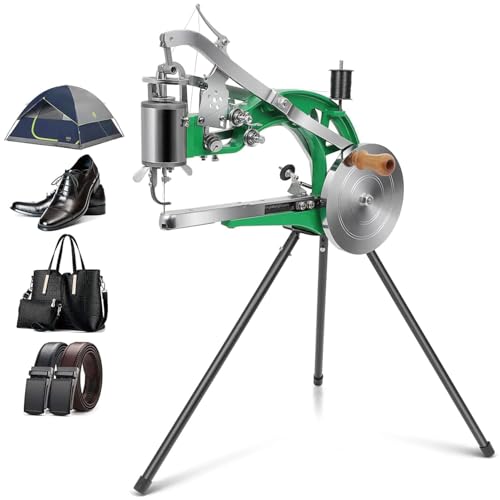
FAHKNS Aluminum Shoe Repair Machine
Best for: Home shoe repair and leather work
- Suitable For
- Shoe Repair, Leather
- Dimensions
- 20 × 13 × 5.5 inches
- Weight
- 20 pounds
View on Amazon: FAHKNS Aluminum Shoe Repair Machine Affiliate link
This FAHKNS unit is a compact cobbler machine built from aluminum alloy. It handles stitch thickness up to 0.24 inches and adjusts spacing between 0.08 and 0.35 inches. The 20-pound frame includes a detachable stand for flexible mounting. You can use nylon or cotton thread for shoes and heavy fabrics. Its green finish and small footprint suit home repair tasks.
Pros
- Aluminum alloy construction for durability
- Stitch thickness up to 0.24 inches
- Adjustable stitch dispenser from 0.08 to 0.35 inches
- Rotating foot and needle for 360-degree positioning
- Detachable stand for easy storage and mounting
Cons
- Requires manual assembly
- Heavier at 20 pounds
- Limited to single needle operation
Good fit if
- You need a machine for shoe repair
- You work with thick leather or canvas
- You want a compact unit for home use
Skip if
- You require automatic thread trimming
- You need industrial speed for high volume
- You prefer a lightweight portable device
Verdict: FAHKNS 165967-3 Leather Sewing Machine fits cobbler and leather repair tasks well. It offers stable performance for thick materials through its adjustable stitch settings and rotating head.

FAHKNS Manual Cobbler Shoe Repair Machine
Best for: shoe repair and thick leather stitching
- Suitable For
- Shoe Repair, Leather
- Dimensions
- 20 × 5.7 × 13.8 inches
- Weight
- 11.1 pounds
View on Amazon: FAHKNS Manual Cobbler Shoe Repair Machine Affiliate link
This FAHKNS manual leather sewing machine handles stitch thickness up to 0.24 inches. It features a 360-degree rotating needle and presser foot for better control. The unit weighs 11.1 pounds and measures 20 by 5.7 by 13.8 inches. You can detach the stand for storage. It suits shoe repair and leather work using nylon, silk, or cotton thread.
Pros
- Stitch thickness capacity of 0.19-0.24 inches
- 360-degree rotating needle and foot
- Detachable stand for compact storage
- Aluminum alloy construction for durability
Cons
- Requires manual assembly and oiling
- No automatic thread tension control
- Heavy at 11.1 pounds for portability
Good fit if
- You need to repair thick leather or shoes
- You want a machine with a rotating needle
- You prefer a detachable stand for storage
Skip if
- You need automatic stitch length adjustment
- You want a lightweight portable unit
- You require a fully automatic machine
Verdict: FAHKNS 11.1 lb Manual Leather Sewing Machine fits cobblers who need thick material handling and manual control. It is not for those seeking lightweight or automatic features.
Specifications side by side
| Spec | FAHKNS Aluminum Shoe Repair Machine | FAHKNS Manual Cobbler Shoe Repair Machine |
|---|---|---|
| Suitable For | Shoe Repair, Leather | Shoe Repair, Leather |
| Dimensions | 20 × 13 × 5.5 inches | 20 × 5.7 × 13.8 inches |
| Weight | 20 pounds | 11.1 pounds |
| Size | Lesser | Normal Size |
| Color | Green | Green |
| Model | 165967-3 | 165967-1 |
Frequently asked questions
Which FAHKNS machine is better for home shoe repair?
The FAHKNS Aluminum Shoe Repair Machine (B0F21KMLGV) is the top choice for home use. Its verdict states it fits cobbler and leather repair tasks well. The adjustable stitch settings and rotating head provide stable performance for thick materials. This model is designed specifically for home shoe repair and leather work.
What is the weight difference between the two machines?
The FAHKNS Aluminum Shoe Repair Machine weighs 20 pounds. The FAHKNS Manual Cobbler Shoe Repair Machine weighs 11.1 pounds. The manual model is significantly lighter. This makes the manual unit easier to move or store. The heavier aluminum unit offers a different stability profile for stationary work.
Do both machines handle thick leather materials?
Yes, both units are suitable for thick leather. The aluminum model offers stable performance for thick materials through its adjustable stitch settings. The manual model is described as fitting cobblers who need thick material handling. Both are listed as suitable for shoe repair and leather applications.
How do the dimensions of the machines compare?
The aluminum model is 13 inches wide and 5.5 inches high. The manual model is narrower at 5.7 inches wide but taller at 13.8 inches high. Both share the same 20-inch length. The aluminum unit is labeled as lesser size, while the manual one is normal size.
Is the FAHKNS manual machine automatic?
No, the FAHKNS Manual Cobbler Shoe Repair Machine is not automatic. It provides manual control for stitch thickness. The guide notes it is not for those seeking automatic features. You operate it by hand, which allows for direct control over the stitching process on thick leather.
Which machine has a rotating head?
The FAHKNS Aluminum Shoe Repair Machine (B0F21KMLGV) features a rotating head. This component contributes to its stable performance for thick materials. The manual model does not list this feature in its specifications. The rotating head helps in maneuvering leather goods during repair tasks.
What color are these FAHKNS sewing machines?
Both machines are green. The FAHKNS Aluminum Shoe Repair Machine is green. The FAHKNS Manual Cobbler Shoe Repair Machine is also green. They share this color attribute despite their different sizes and weights. The aluminum frame construction is consistent across both models.
Are these machines suitable for professional cobblers?
Both models are suitable for cobbler tasks. The aluminum model fits cobbler and leather repair tasks well. The manual model is designed for cobblers needing thick material handling. The manual unit is not for those seeking lightweight or automatic features, making it a robust choice for professional manual work.